The way these stories develop has a certain ceremonial familiarity. A bank levies a fee. A client observes. A lawsuit is brought. Millions of account holders get, if they’re fortunate, just enough money to purchase coffee at a petrol station when a settlement is eventually announced, a figure with enough zeros to make the news release feel gratifying. This path is closely followed by the Aseltine v. Bank of America class-action settlement. The sum of twenty-one million dollars seems fair. After that, you read the comments.
Aaron Aseltine, the account holder, filed a lawsuit in federal court in North Carolina in April 2023, alleging that Bank of America had been surreptitiously imposing a $15 charge each time a wire transfer reached a customer’s account. Incoming cables, not outgoing ones. The sort in which you are only the recipient of money sent to you by someone else. The complaint alleges that the bank concealed this fee, leading millions of consumers to pay it without fully understanding its purpose. The approach was allegedly dishonest and violated BANA’s own account conditions, according to the lawsuit.
Bank of America vigorously retaliated. The bank argued that the complaint misrepresented how account agreements actually operated, calling its tone “inflammatory” and seeking dismissal. A federal court was unconvinced. The court permitted the lawsuit to proceed in September 2023, and by April 2024, the parties had negotiated a preliminary settlement. All things considered, the settlement was swift; just over a year passed between the first filing and the inked contract.
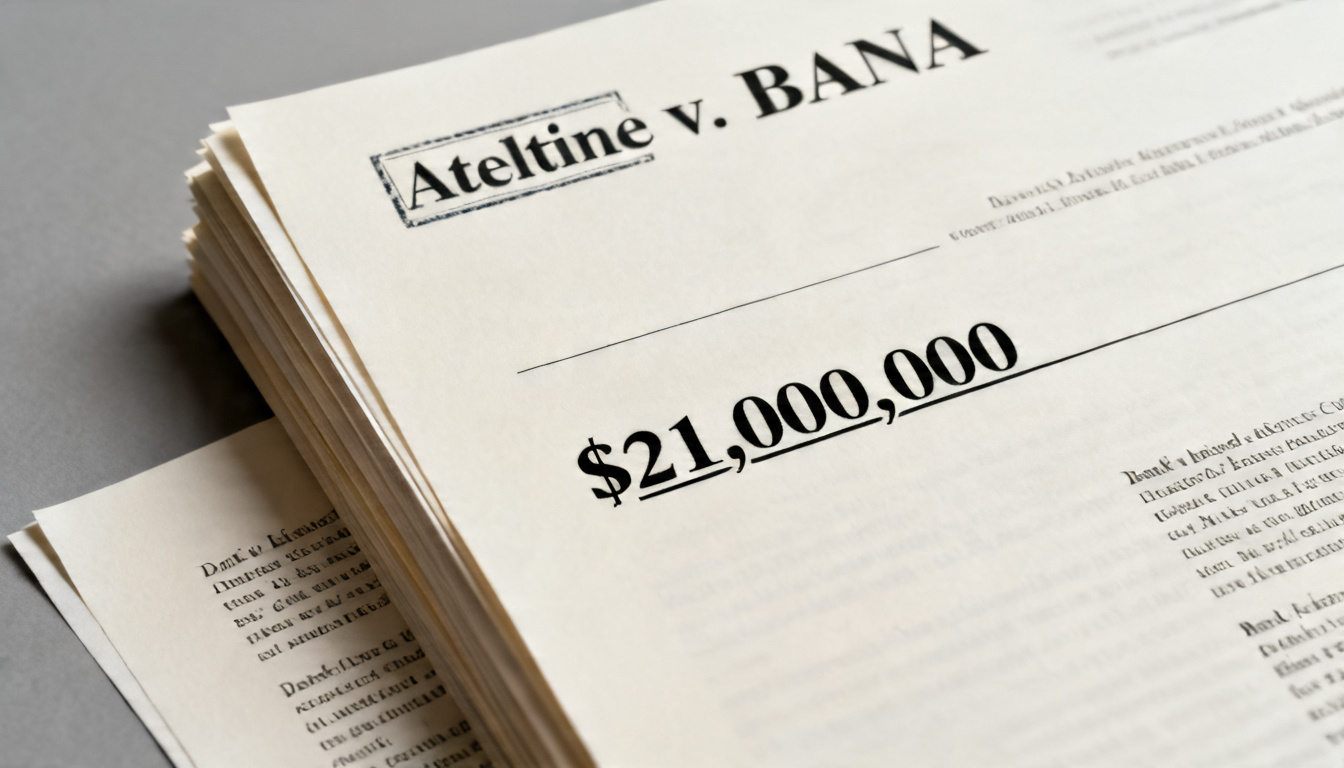
For more than a million class members, the settlement sum was $21 million. That’s actual money on paper. In actuality, the individual payouts decreased to an almost ridiculous amount, as legal expenses consumed almost one-third of the fund—roughly $7 million went to class counsel, and the remaining half was distributed proportionately among the whole class. On Top Class Actions, a commenter claimed to have received eighteen cents. Another received $2.29. Another person received $9 and, understandably frustrated, pointed out that the bank had likely charged them four times that amount in fees and still made a profit.
That math has a certain hollowness that is hard to ignore. By returning a portion of the millions of dollars in allegedly incorrect charges to the consumers who paid them, Bank of America, which does not acknowledge any wrongdoing under the terms of the settlement, effectively settled disputes. To be fair, the attorneys worked hard to reach a settlement; that effort is valuable. However, the difference between winning and losing a class action might seem quite narrow from the perspective of the typical student.
| Plaintiff | Aaron Aseltine |
| Defendant | Bank of America, N.A. (BANA) |
| Court | U.S. District Court, Western District of North Carolina |
| Presiding judge | Hon. Max O. Cogburn Jr. |
| Fee charged (alleged) | $15 per incoming wire transfer |
| Class period | March 8, 2019 – August 31, 2023 |
| Final approval hearing | October 21, 2024 |
| Claims administrator | Kroll Settlement Administration LLC |
| Class counsel | Kopelowitz Ostrow PA; The Van Winkle Firm; KalielGold PLLC |
| Defense counsel | Goodwin Procter LLP; McGuireWoods LLP |

The payout’s format was simple: current Bank of America account holders received a direct deposit credit, while individuals who had since closed their accounts received a check by mail. For anyone in the class who did not opt out or object before the November 2024 deadline, the settlement was automatic; no claim form was needed.
In an otherwise depressing procedure, that is the one instance of consumer-friendly design. However, there is a recurring theme of bewilderment in the comments on consumer websites. Despite having no recollection of ever paying wire transfer fees, at least one individual claimed to have received a small reimbursement. They also separately expressed concern that their compensation was paid at the expense of someone with a valid claim.
That perplexity suggests something worth considering. Class actions are tools of structure. Their main purpose is not to compensate individual plaintiffs, but rather to discourage large-scale corporate actions that cause little injury to a large number of people, the so-called “negative value” claims that no one person could profitably pursue on their own. In that specific sense, the Aseltine settlement applied collective legal pressure in situations when individual action was not feasible, which is what class actions are intended to achieve. It’s another matter completely if $21 million is enough to discourage a bank the size of Bank of America.
It’s important to recognise the larger background here. Federal authorities have been focusing increasingly on what they call “junk fees” over the past several years. These are tiny, recurring payments that generate significant revenue because most consumers are unable to act on them. This case was only one part of the several rounds of fee-related scrutiny that Bank of America has endured. The settlement has been closed. The bank denied any misconduct. The attorneys received compensation. And someone got eighteen cents somewhere and blogged about it online.
Small compensation could simply be the inevitable consequence of class-action mechanics. It’s also likely that they raise important questions regarding the effectiveness of this specific legal tool in protecting the individuals it is meant to. That issue was not addressed by the Aseltine v. BANA class settlement. It just included one more piece of information.