You’ll notice something when you go through Harlan County, Kentucky, or any rural area in Nebraska or Mississippi. The old clinic on the outskirts of town, which once had a hand-painted sign and a pickup-filled parking lot, now has a new logo above the door identical to the one over the state line and two counties over. The branding is distinct, corporate, and clear. The majority of individuals in the community could only tell you that it changed hands, not when.
That’s how it usually occurs. No news release, no PowerPoint-based town hall meeting. A financially troubled hospital discreetly consents to a takeover. A family physician who is retiring takes over his practice. In just eighteen months, the nurses report to a regional manager three hundred miles away, the waiting room has a new scheduling app, and the town has unknowingly handed over its healthcare infrastructure to a corporation that most locals still cannot identify. This may be alright. Another possibility is that no one actually asked.
Corporate healthcare has long been expanding into rural America, but over the past ten years, this expansion has accelerated significantly due to several factors that are difficult to dispute on paper. Long before any acquisition team arrived, rural hospitals were already having problems: they were understaffed, underfunded, and losing doctors to cities that offered better benefits. The Rural Health Information Hub reports that more than 140 rural hospitals in the US closed between 2010 and 2023. Businesses that fill that void can legitimately assert that they are meeting a demand. They’re not totally incorrect, either.
Company profile
Rural Health Holdings (RHH) — Composite Profile
| Sector | Healthcare — Rural & Community Services |
| Founded | Early 2000s (exact dates vary by entity) |
| Headquarters | Midwest United States |
| Operations | Clinics, urgent care centres, and hospital partnerships across 14+ rural states |
| Employees | Approx. 22,000 (as of 2024 estimates) |
| Business model | Acquire distressed rural hospitals and independent practices; centralise administration; expand telehealth infrastructure |
| Key concern | Community dependency, reduced local decision-making, and consolidation of rural healthcare markets |
| Reference links | Rural Health Information Hub — ruralhealthinfo.org KFF — The Rural Hospital Crisis |
Nevertheless, there’s a sense that something more difficult to measure is also being lost as you see this happen in town after town. The services offered shift when a nearby hospital shuts, and a regional chain establishes a clinic in its stead. Units of obstetrics vanish. Emergency rooms are becoming smaller. Routine treatment, diagnostics, and outpatient operations are frequently more profitable. What is left over is what small-town inhabitants most urgently require. To be honest, the evidence varies depending on who commissioned the study, and it’s still unclear if the overall impact is better or worse for patients.
When a town’s last independent physician retires and is replaced by a rotation of doctors drawn from a corporate staffing pool, a certain type of silence descends upon the community. Patients take note. The criticism that “nobody knows my history anymore” or that appointments seem hurried in ways they never did before can be heard at diners and petrol stations. These aren’t major complaints; rather, they’re little deteriorations that don’t make news but build up over time to significantly alter what it means to live someplace.
The economics of the expansion are worth understanding clearly. Private equity frequently supports businesses that purchase rural practices, and its schedules aren’t necessarily aligned with community health outcomes. Usually, the objective is to maximise efficiency, which entails having fewer employees, standardised procedures, and centralised billing, before either expanding the portfolio or leaving.
In sectors where the product is a widget, such a model has proven effective. Healthcare is more intricate. Investors appear to think the same efficiencies apply, though only in some limited ways. However, if a clinic decides to reduce its nursing staff by 20% to improve a margin report, this decision will not be reflected in any financial disclosure.
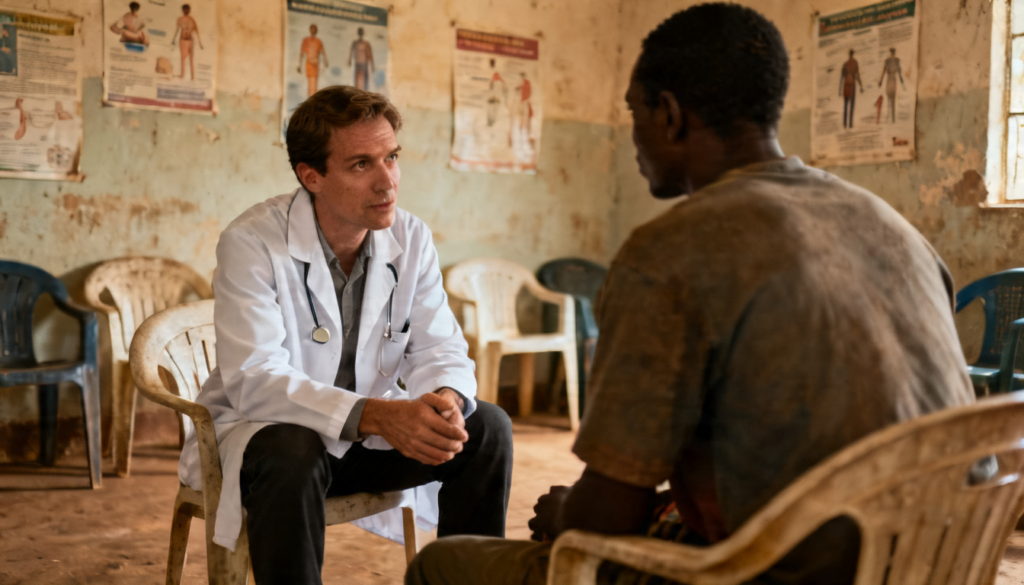
The irony in this situation is difficult to ignore. For a long time, rural America has been wary of government overreach and distant bureaucracy making decisions that affect local communities. However, the corporate healthcare expansion is an example of a distinct form of remote authority, one that is not subject to town meetings or election cycles and that reports to shareholders rather than citizens. A government agency can, at the very least, be put under pressure, removed from office, or held responsible in some obvious manner. It is more difficult to deal with a portfolio firm headquartered in a mid-rise office park in Nashville or Houston.
This does not imply that the businesses entering the rural healthcare market are bad. Some of them are truly beneficial, such as providing telehealth infrastructure to underserved communities and maintaining emergency services that would otherwise have disappeared. The image is actually rather intricate. However, complex images call for complex discussions, and many of those communities aren’t currently having them, in part because the changes are happening so slowly and in part because any access is better than none when you’ve been medically underserved for decades.
It’s truly unclear what will happen next. The FTC is closely examining hospital mergers and acquisitions as part of the growing federal monitoring of healthcare consolidation. It remains to be seen if this focus extends significantly to rural markets, where there is little political clout and little exposure. For the time being, local names continue to decline, logos continue to rise, and small-town America continues to question whether what has come to save them is indeed something to be saved from in the long run.