
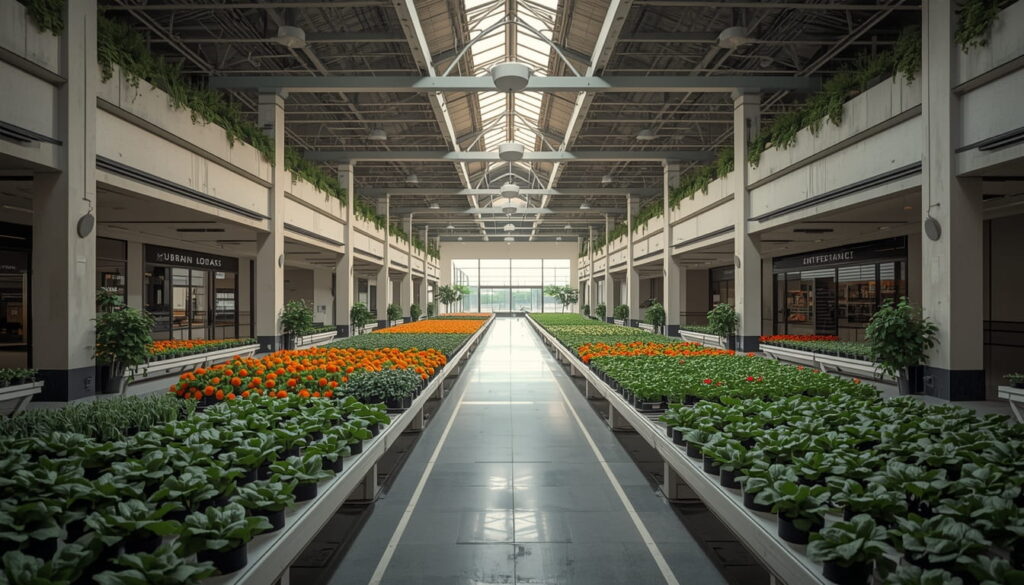
An innovative startup is redefining the narrative in the centre of Ohio, where ghost towns of shopping malls have become synonymous with a downturn in retail business. The company is converting empty malls into urban farms powered by AI, turning neglected retail spaces into successful hubs for healthy food production.
This will address two issues simultaneously: the overcrowding of empty commercial spaces and the need for Midwest communities for more affordable, fresher produce. The concept emerged from the perspective of developers who realised that large indoor malls provided ideal environments for controlled-environment agriculture.
The company refurbished these buildings instead of destroying them, removing the horizontal arrangement in favour of a vertical one, filling them with hydroponic and vertical farming beds, and climate-controlled areas. What were once food courts and department stores are now rows of green leaves, herbs, and vine crops being cultivated under low-energy LED lighting.
AI is at the core of all the activities. Sensors measure temperature, humidity, nutrient levels, and plant health 24/7. Machine-learning algorithms automatically change the watering schedule, the intensity of lighting and the air circulation to suit the needs of each crop.
The outcome is increased production, reduced water consumption and practically no need to use pesticides. Plants previously reliant on seasonal weather conditions are now planted year-round, providing year-round harvests despite the severe winters in Ohio.
The project is about more than technology; it’s about real economic and environmental wins. Every converted mall generates dozens of jobs for local technicians, farm operators, and logistics personnel, putting life back into neighbourhoods that were severely hit by store closures.
The local population can have rapid access to ultra-fresh vegetables picked the same day they are delivered to grocery stores, reducing supply chain and transportation-related emissions.
Water recycling systems can reduce water use by up to 90% compared to traditional field farming. The indoor controlled environments also minimise food waste and spoilage, thus making the whole process more efficient and eco-friendly.
The startup’s model is on the move, with two of its previously unused malls already in full production and an additional three locations planned for conversion by the end of the year. It is perceived as an intelligent way to bring technology and community renewal, by both city officials and residents. As cities continue to change, the AI-driven mall farms in Ohio provide an effective example of how to transform relics of commerce into resources that can supply people and local economies.